

Giving meaningfully doesn't have to be complicated. A handful of tools can make your giving simpler to manage, smarter about taxes, and more impactful for the causes you care about. Here's a rundown of five options to consider.
1. Donor-Advised Funds (DAFs)
A donor-advised fund, or DAF, works a lot like a savings account for your giving. You contribute money or assets, get the tax benefit that year, and the balance can grow while it's invested. When you're ready, this month, next year, or years down the line, you recommend a grant to the nonprofits you want to support.
A lot of donors already have one of these accounts and just know it by a different name: a charitable giving account, a giving fund, or "a 401(k), but for giving." DAFs are offered by community foundations, the charitable arms of major financial institutions, and independent providers. There are more than a thousand to choose from nationally, so most donors can either find one connected to a brokerage they already use or explore providers aligned with their values.
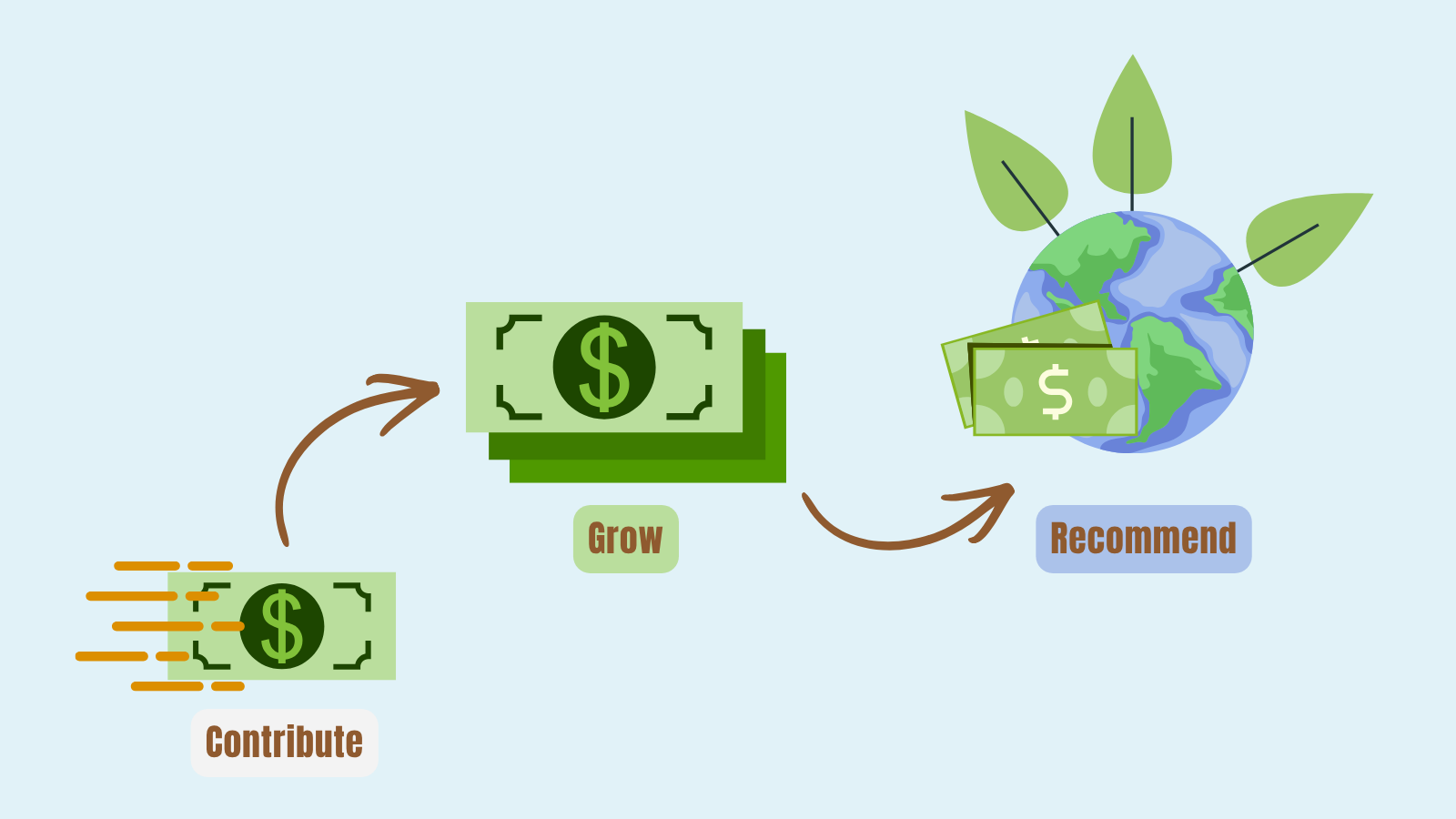
Making a grant from a DAF is technically a recommendation that your provider approves. Approval depends on the recipient organization having a 501(c)3 status, being in good standing with the IRS, and the gift going toward the organization's direct programmatic work.
A gift counts for a given tax year only if your provider receives it by 12/31. Starting the process early gives a gift room to land in the year you intend. DAF Day (October 8 this year), a good natural checkpoint to shape your giving plans for the rest of 2026.
We're already part of the DAF giving pathway. If you have a donor-advised fund, search for CEJA, or California Environmental Justice Alliance, directly through your provider, or use the DAFpay button on our donation form for a faster checkout.
2. Appreciated Stock or Other Securities
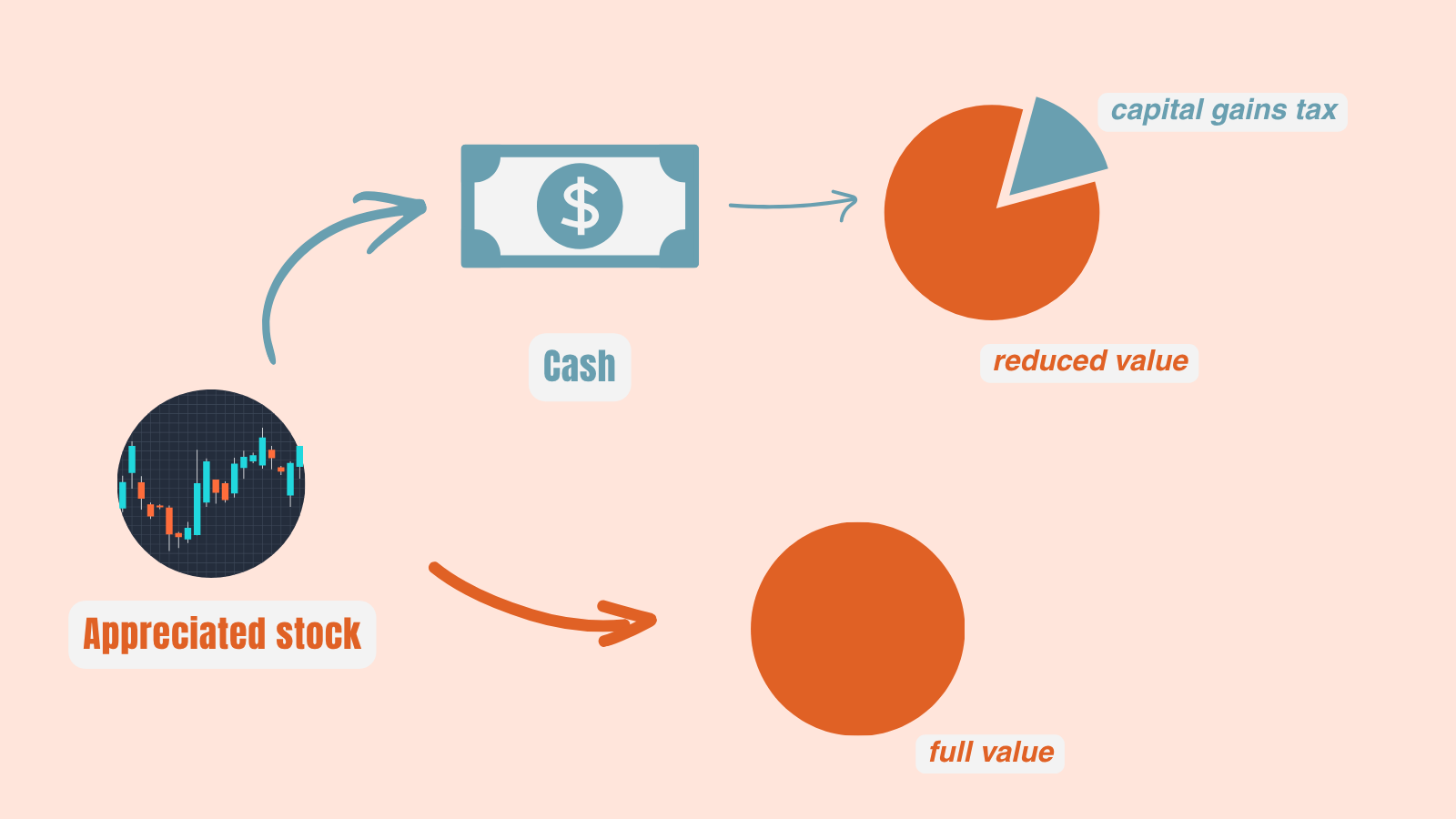
If you own stock, mutual fund shares, or other investments that have grown in value, donating them directly to a nonprofit can be more tax-efficient than giving the equivalent amount in cash. Because the gift is transferred rather than sold first, you can generally avoid the capital gains tax you'd otherwise owe if you sold the asset yourself, while the organization receives the full value.
This avenue works whether the shares go straight to a public charity like CEJA or into a donor-advised fund as a contribution.
3. Qualified Charitable Distributions (QCDs)
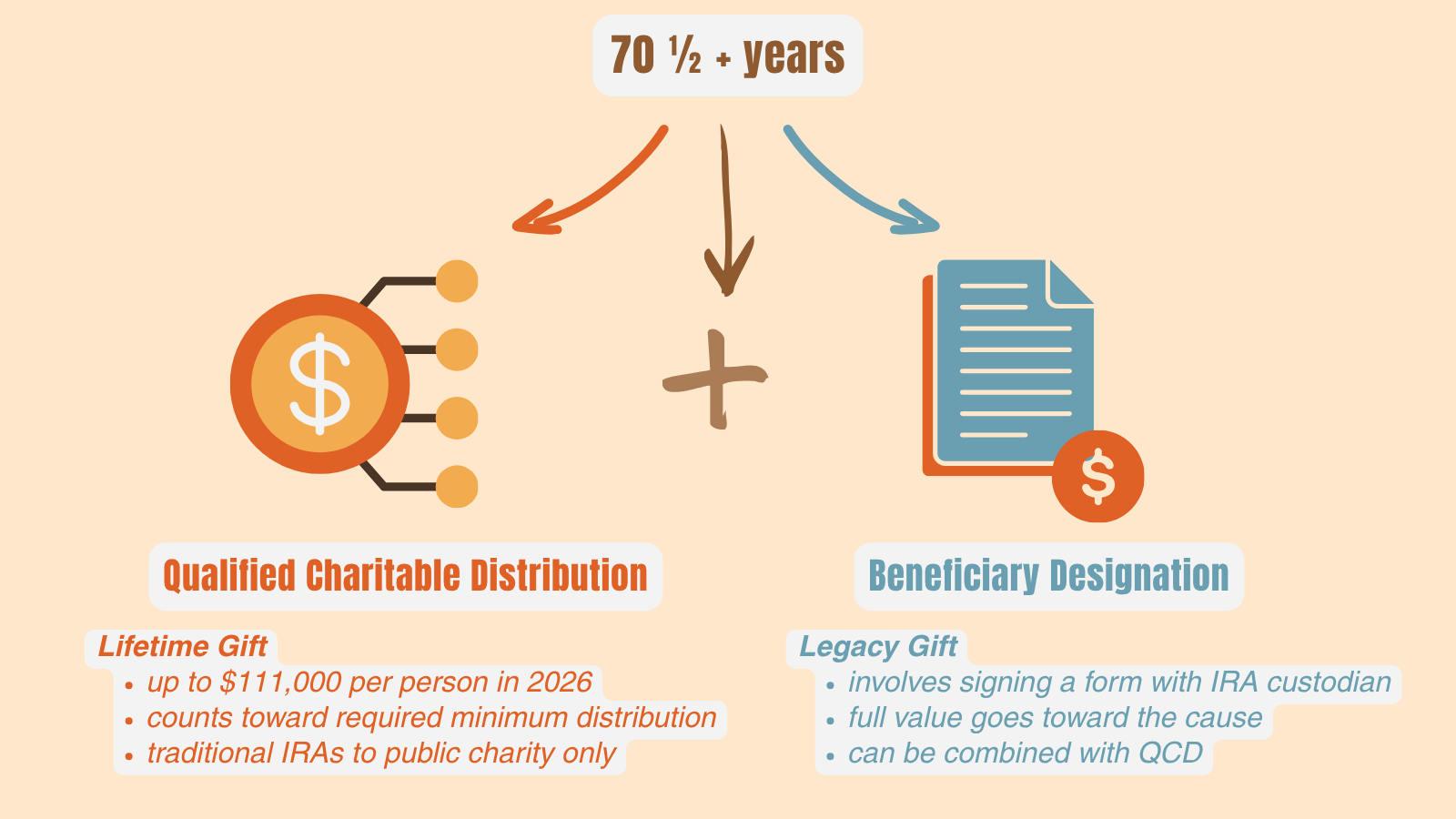
If you're 70½ or older, your IRA opens up an additional giving option: a qualified charitable distribution, or QCD.
A QCD moves directly from your IRA to a nonprofit. That matters most if you're subject to required minimum distributions (RMDs): a QCD can satisfy some or all of that requirement for the year while keeping the amount off your taxable income.
For 2026, the limit is $111,000 per person, or $222,000 for married couples filing jointly if both spouses have IRAs and qualify separately.
4. Naming a Charity as Your IRA Beneficiary
While QCDs handle giving during your lifetime, there's also a legacy option: naming a nonprofit as the beneficiary of your IRA or other retirement account.
This is a different kind of decision. It takes effect after your lifetime and is set up through a beneficiary designation with your IRA custodian, separate from your will. Traditional IRA distributions are normally taxable to whoever receives them, heirs included. A qualified charity is exempt from income tax, so the full value of what you leave goes toward the cause. Many donors who use QCDs during their lifetime also set up a beneficiary designation as a complementary, longer-term piece of their giving plan.
5. Employer Matching Gifts
Many employers offer a matching gift program that doubles, and sometimes more than doubles, the value of a donation at no extra cost to the donor.
Checking whether your employer participates usually takes just a few minutes through an HR or benefits portal, and the process for submitting a match request is typically straightforward once you know where to look. For those who choose to donate through our online donation form, you will have the opportunity to check to see if your employer has a gift matching program.
Where We Fit In
Grassroots environmental justice organizations operate in a tight funding landscape. Research has found that EJ-focused groups receive roughly 1.3% of U.S. climate philanthropy dollars, and only 3% of climate funding from 50 influential U.S. foundations goes to grassroots climate justice groups, even as they lead much of the community-driven work on the ground. That makes individual giving decisions, including the tools covered here, genuinely consequential for organizations like ours.
Please consider joining our community of justice-oriented supporters by making a gift. A gift as small as $2 a month allows us to facilitate over 120 connections between community members and state decisionmakers.
What impact do you want to have on California's future?
In 2026, those who use a standard deduction on their tax return can now claim up to $1,000 for donations made directly to a charitable organization. (NOTE: Contributions to a DAF do not count toward this amount). Those itemizing deductions must now donate more than 0.5% of the adjusted gross income to receive a deduction, and only on the amount that exceeds that minimum.
This post is educational and should not be considered financial advice. Pair it with a conversation with your own tax or financial advisor for guidance specific to your situation.
